UK Nature Carbon, Made Clear Knowledge share series
Autumn 2025
UK Nature Carbon, Made Clear Knowledge share series Autumn 2025 The Science Based Targets initiative (SBTi)’s updated Corporate Net-Zero Standard encourages companies to start thinking about carbon removal now rather than later, and for good reason. Companies need to act now to secure high-integrity credits, if carbon offsetting forms part of their net zero strategies.
After years of rapid but sometimes rocky growth, the voluntary carbon market (VCM) is maturing and buyers are now far more discerning, rightly demanding more integrity carbon. So, as demand for voluntary carbon rises, the question is: which providers can you trust?
The answer for those companies with UK operations may lie closer to home than they think. Previously dismissed as too small and complex a player, UK project developers have been quietly yet diligently building nature-based carbon projects founded on professionalism, strong governance, science and impressive co-benefits. And there are some surprisingly large-scale projects emerging.
Now, as the global voluntary carbon market recalibrates, those years of slow, standards-heavy development are starting to look like a very attractive foundation for investment-ready nature carbon projects.
The UK is world-renowned for its varied and ecologically important habitats, from woodlands, to wetlands, peatlands, wildflower meadows, rivers and seas, they are all part of the UK’s natural capital and our national heritage. These habitats provide many vital ecosystem services, not least of which is capturing carbon.
The slow road to global credibility
Unlike many countries that raced to launch credits and attract buyers, the UK took a deliberately cautious path. The Woodland Carbon Code (WCC) and Peatland Code, both backed by the government, are at the heart of this approach. These schemes set strict rules for modelling, verifying, and monitoring carbon sequestration, designed to give buyers greater confidence in the validity of the carbon benefits they are purchasing.
The WCC is also accredited by International Carbon Reduction and Offset Alliance (ICROA) and has higher integrity requirements than several other global standards including Verra VM0047, ABACUS and CCB.
How the Woodland Carbon Code compares with key global standards
- Eligible areas for tree planting – under the WCC tree planting can only take place on land that has not been wooded for the past 25 years, versus 10 years in the aforementioned codes. Soil suitability tests are also built into the WCC and are assessed as part of Environmental Impact Assessments (EIAs) and planning approval processes.
- Conservative accounting and buffer pools – unlike global codes, a precision deduction of 20% is automatically applied to all projects after carbon projections are complete, to guard against any risk of over crediting. A further insurance buffer of 20% is also then applied.
- Strict additionality – Robust additionality tests relating to financial and legal preconditions for the project are used to assess whether the carbon benefits delivered are truly ‘additional’ . This is in contrast with Verra VM0047 which allows stacking of additional revenues such as timber, on the condition that the project still passes the required additionality tests.
- Biodiversity and native species – Climate resilient, biodiverse native forests are prioritised in the UK Forestry Standard: UK regulations that underpin the WCC. A minimum of 10% open space is required in all designs. The inclusion of some non-native species is allowed, to account for future climatic changes. The WCC’s additionality investment test, which includes prescribed cost and revenue assumptions, rules out the use of non-native timber plantations for carbon projects. This is in contrast with Verra VM0047 which has no requirement to use ecologically appropriate species. ABACUS stipulates that established woodlands must be ecologically appropriate to the geographic area.
The UK’s cautious approach frustrated some early adopters. While international projects were generating millions of credits, UK supply remained modest. But as scrutiny on carbon markets grew, that conservative reputation has turned into a strength.
The latest WCC version 3.0, launched in August 2025, has brought the standard into closer alignment with global benchmarks like the Integrity Council for the Voluntary Carbon Market’s (ICVCM) Core Carbon Principles, further strengthening its credibility. The Peatland Code, meanwhile, has gained global respect as one of the few rigorous standards for restoring a carbon sink that is both fragile and highly effective. Both Codes have applied for approval by the ICVCM.
New codes are also being developed in the UK, such as the Woodland Water Code currently being piloted for flood alleviation and water shading by Forest Research. One of the pilot projects is Revere’s Windermere Woodland Water Quality Project initiated to reduce pollution in Windermere through nature-based solutions in its catchment area.
 Credit: Gary Smith
The market responds
The UK’s rigorous approach is starting to pay off. Woodland Carbon Units, verified under the WCC, have nearly doubled in price in just four years—from about £11 in 2020 to almost £27 in 2024 and Peatland Units now average £25*. But these averages from last year are already someway distant from publicly reported sales prices of £50-75 in 2025 that are now becoming standard for the highest quality UK woodland and peatland projects. Projects are scaling too: by early 2024, more than 2,000 woodland projects and over 240 peatland projects were registered**.
These aren’t explosive numbers compared to international markets, but they’re a sign that buyers will pay a premium for credits they can trust. For companies with large UK operations, the appeal is obvious: the projects are close to home, easy to verify, and backed by a policy framework that guarantees permanence and co-benefits for biodiversity and people.
** GOV.UK
A market built around nature and people, not just carbon
Another factor that sets the UK apart is how deeply its carbon market is integrated into wider environmental goals. Policies like Biodiversity Net Gain (BNG), which makes nature recovery mandatory for developers, and Protected Landscapes now having their own guidance and targets for the creation of new native woodlands with co-benefits, complement carbon markets rather than compete with them. The Green Finance Institute has even created a “Nature Markets Toolkit” to help farmers and landowners explore opportunities beyond traditional agriculture.
Investors, too, are being given clearer pathways. The ERM Sustainability Institute’s 2024 investor guide outlines frameworks for assessing risk, modelling revenue, and financing restoration projects. It’s a sign that this isn’t just about offsets; it’s about building a proper investment-grade nature market.
And the UK needs it – it is one of the world’s most nature-depleted countries in the world, in the bottom 10% globally, with just half of its biodiversity left compared to a global average of 75%* . 38% of UK species are declining in abundance and 16% of UK species are at threat of extinction** . Private finance is urgently needed to restore UK nature.
* Biodiversity Intactness Index, Natural History Museum
** State of Nature, Report, 2023
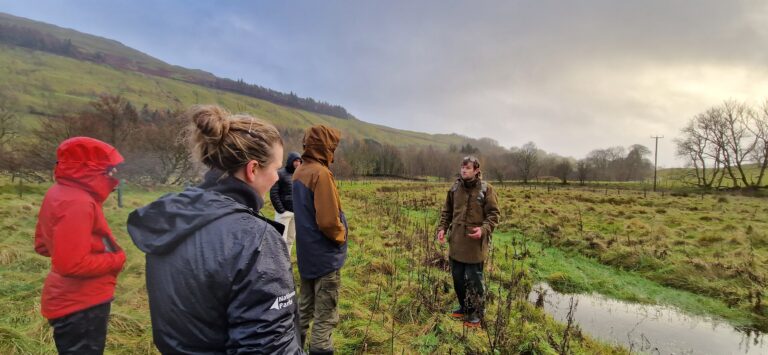
UK nature carbon buyers can walk the sites, meet the land managers, and see the biodiversity gains for themselves. In a market where trust is the most valuable currency, that proximity is powerful.
Impressive co-benefits
Financing nature restoration for carbon removal in UK will bring multiple co-benefits for biodiversity, communities, farmers and businesses. These include:
- Boosting biodiversity such as rare and iconic species such as pine marten and red squirrel
- Capturing pollutants to improve our water and air quality
- Reducing flooding and fire risks
- Preserving and improving soil quality
- Providing habitats for invertebrates, including vital pollinator species
- Creating new spaces for recreation and wellbeing
- Creating new jobs and career paths
- Diversifying farm income streams.
Trusted hands on the ground
Of course, standards and policies mean little without trusted delivery. Here, the UK’s conservation heritage is a strength. Organisations like National Parks have decades of ecological expertise and public trust, while partnerships like Revere – a collaboration between UK National Parks and impact specialists Palladium – are blending that expertise with commercial know-how to bring private capital into nature restoration at scale.
This combination of technical rigour and credible stewardship helps reassure buyers who want more than glossy marketing slides when they invest in climate solutions.
A different kind of carbon story
In many ways, the UK market offers a different story entirely to the global voluntary carbon market. It’s not about offsetting emissions in a faraway rainforest but about restoring woodlands and peatlands close to where emissions are produced. Buyers can walk the sites, meet the land managers, and see the biodiversity gains for themselves. In a market where trust is the most valuable currency, that proximity is powerful.
The UK will never compete with tropical nations for scale, but that’s not the point. What it offers is a blueprint for how carbon markets can grow without sacrificing integrity. For businesses tired of navigating an opaque global market, UK credits offer transparency and reassurance – rare qualities in a space still rebuilding its reputation.
This insight article is by Revere, a UK National Parks and Palladium collaboration that scales nature-based solutions across the UK National Parks.
To find out more, contact ross.powell@thepalladiumgroup.com or lisa.sensier@nationalparks.co.uk