UK Nature Carbon, Made Clear Knowledge share series
Autumn 2025
Revere’s UK Nature Carbon, Made Clear roundtable event, held in London, brought together sustainability leaders from a range of sectors from financial services to travel and media, to gain practical insights into UK nature carbon projects and explore how UK nature carbon can meet climate and nature strategy aims.
Case study: The South Downs story
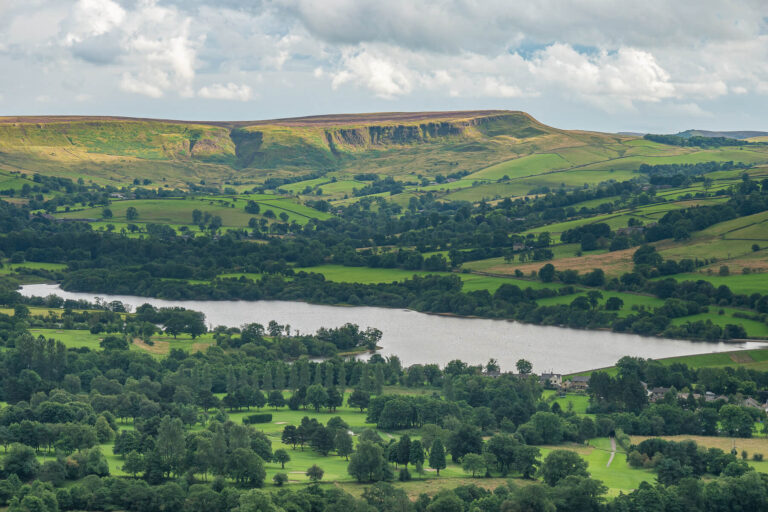
James Winkworth, Director of Growth and Organisational Development at the South Downs National Park Authority, presented the story of Revere’s flagship South Downs Woodland Carbon Project that will span 1,000 hectares across the National Park.
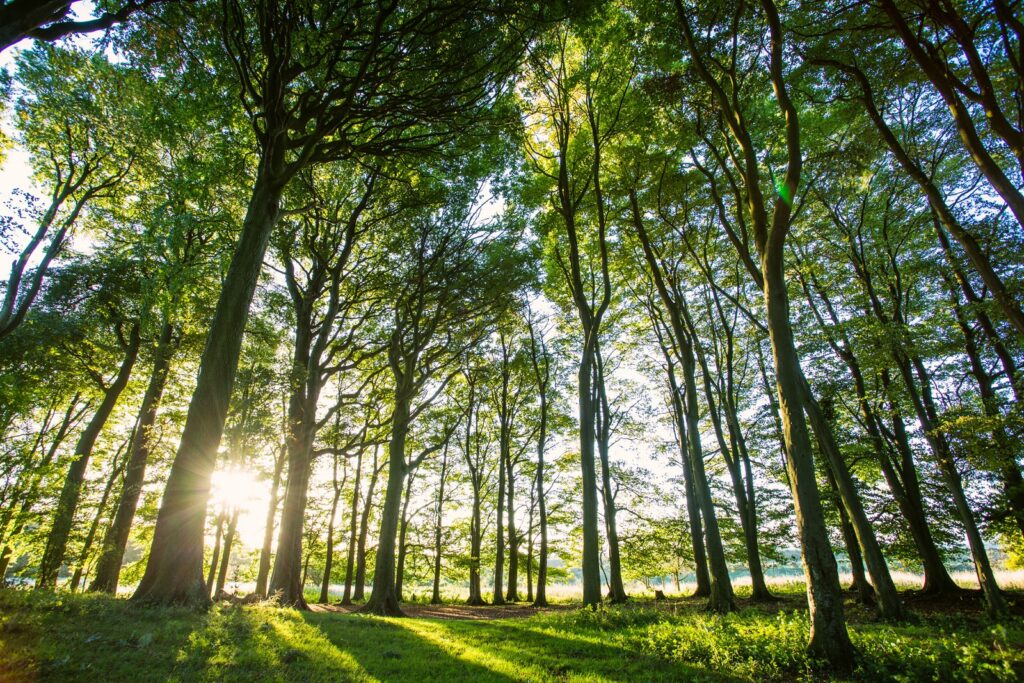
He inspired guests with a vision of the mixed native species woodland and biodiverse ecosystems that the project will enable. The proof-of-concept project has been uniquely modelled to provide a long-term income from carbon sales to the farmers and landowners involved, protecting their livelihoods as well as benefitting the local community and cultural heritage of the National Park.
The unexpected wider business benefits of funding UK nature carbon in National Parks
Oliver Breen, Senior Manager – Climate Change Strategy at Santander UK presented their ongoing partnership with National Parks and the Revere collaboration that was established in 2021. The partnership has funded Revere’s pioneering peatland carbon project in the Cairngorms National Park, as well as other nature and community projects. This close collaboration has unlocked a hugely positive nature story for Santander UK and built confidence in Revere’s ability to reliably provide high-integrity carbon credits.
Oliver explained that of equal value to Santander has been the opportunity to learn from Palladium’s experts in natural capital and the National Parks’ ecology teams. The partnership has also provided fantastic staff volunteering and upskilling opportunities, from team work days in National Parks to Revere experts speaking at Santander staff events.
UK nature carbon opportunities and challenges
The roundtable widened into a group discussion about the opportunities and challenges of UK nature carbon.
Can UK nature carbon meet your climate and nature strategy aims?
Participants largely agreed that UK-generated nature carbon is increasingly attractive within net-zero strategies, particularly because of its strong local co-benefits. Santander’s support for peatland work was highlighted as an example where biodiversity, community impact, and landscape restoration were valued as highly as the carbon credits themselves. Many noted that working “closer to home” resonates strongly with UK customers and helps justify long-term climate commitments.
The opportunity and growing importance of locking in carbon credits for the future at today’s prices was highlighted; prices are projected to increase significantly by 2040 as anticipated corporate demand outstrips the supply of high-integrity nature carbon as net-zero target deadlines shorten.
What are the current barriers to buying UK nature carbon?
Several barriers continue to affect corporate uptake. A key challenge lies in convincing internal decision-makers to invest in UK credits, which are typically more expensive than tropical alternatives. This price sensitivity can slow the transition to portfolios that include higher-integrity domestic projects. Participants emphasised the need to better articulate the additional value provided by UK projects – such as robust governance, local economic benefits, and higher integrity – rather than expecting prices to fall or align with international markets. Clear quantification of co-benefits and strong storytelling were identified as essential to gaining board-level support.
Nature carbon projects ‘close to home’ resonate strongly with UK customers which helps to justify long-term climate commitments – and locking in today’s carbon prices for the future underpins the business case.
Why does UK nature carbon cost more than international nature carbon?
The Revere team explained that UK credits cost more because they reflect the true cost of delivering complex, long-term, high-integrity restoration. Native woodland creation and peatland recovery projects require specialist skills and collaboration between landowners, National Parks, and delivery partners.
Paying landowners fairly, managing risk, and ensuring high-quality ecological outcomes naturally raises project costs, but are important to deliver more durable and trustworthy climate benefits.
Why are the UK National Parks such fertile ground for nature finance innovation
National Parks were recognised as uniquely positioned to drive innovation in nature finance. Their scale, longstanding partnerships with landowners, deep ecological knowledge, and holistic landscape plans all create the conditions needed to deliver projects that are ecologically credible, socially grounded, and aligned with national targets. This integrated, place-based approach was viewed as essential for scaling high-quality nature-based solutions.
What are the future opportunities for UK nature carbon and National Parks?
The group discussed future opportunities, including expanding carbon codes to cover additional habitats such as saltmarsh and wood pasture. While new codes are in development, Revere’s experts and participants acknowledged scientific and methodological challenges – particularly around measurement and permanence – which mean widespread adoption will take time.
Questions raised during the session underscored the need for greater clarity on corporate decarbonisation requirements, shareholder expectations, and portfolio diversification. Participants agreed that high-integrity credits must be paired with genuine internal decarbonisation, stronger communication of resilience benefits, and clear alignment with corporate sustainability targets.
Special thanks go to our speakers and guests at the Revere roundtable event.
This insight article is by Revere, a UK National Parks and Palladium collaboration that scales nature-based solutions across the UK National Parks.
To find out more, contact ross.powell@thepalladiumgroup.com or lisa.sensier@nationalparks.co.uk